Side Effects

Side Effects of Chemical Peels

A well-designed peel is a controlled medical act: expected skin responses (tightness, flaking, short-term redness) are not “complications.” True complications are uncommon and usually preventable with correct patient selection, chemistry control, and strict aftercare.

Key principle: side effects increase when treatment becomes too aggressive, when products are used incorrectly at home, or when post-peel rules (sun, alcohol-based cosmetics, occlusion) are ignored.

What is normal after a peel?

  • Warmth / mild burning during application (should remain tolerable and monitored).
  • Tightness and dryness during the first 48–72 hours.
  • Flaking (desquamation) from day 2–5 (varies with peel type and skin condition).
  • Mild redness that progressively decreases.
  • Temporary sensitivity to wind, heat, friction, and active cosmetics.

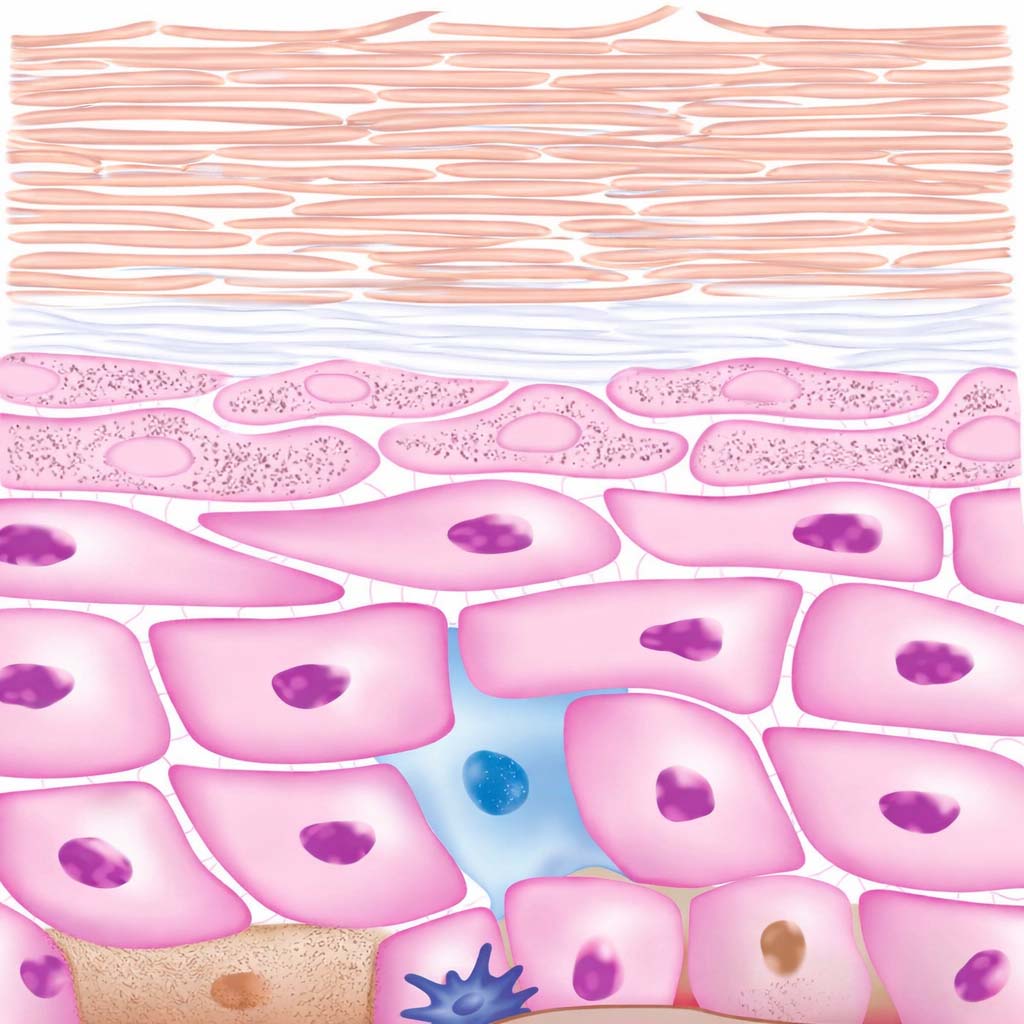
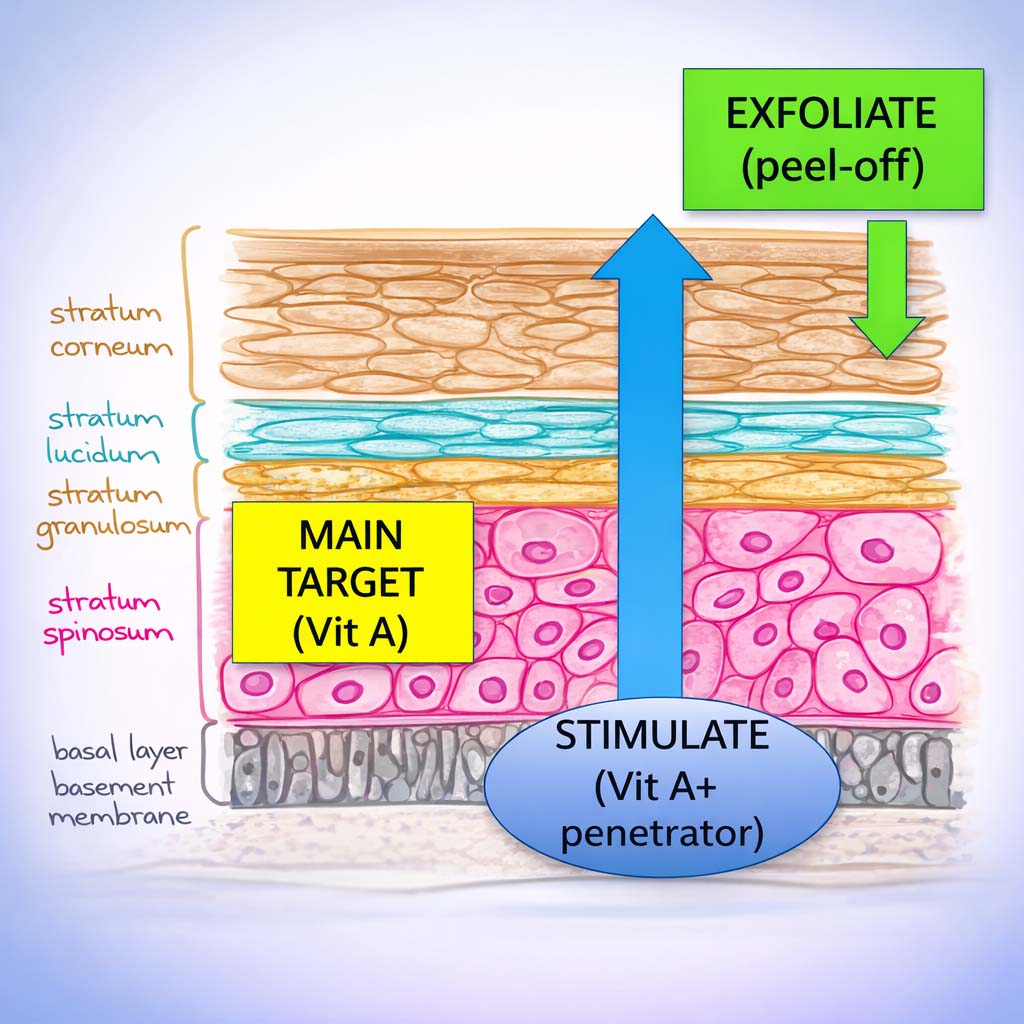
These changes reflect controlled renewal of the stratum corneum and barrier recovery. In modern protocols, the goal is high safety + predictable recovery.

Warning signs: when to contact a clinician

Contact us promptly if you have:

  • Redness that worsens after day 3–4 instead of improving
  • Intense swelling, especially around eyes
  • Oozing, crusting, increasing pain, or fever
  • New blisters or “raw” areas
  • Darkening patches that appear rapidly (suspected PIH)

Emergency (same day) if:

  • Severe pain not relieved by cooling measures
  • Rapidly spreading swelling or hives
  • Signs of infection (pus, expanding redness, systemic symptoms)
  • Eye exposure or visual symptoms

Most common side effects (and why they happen)

  • Irritation / dermatitis: barrier weakened + friction, heat, or alcohol-based products.
  • Acne flare / comedones: occlusion and comedogenic cosmetics used during healing.
  • Post-inflammatory hyperpigmentation (PIH): inflammation + UV exposure + wrong intensity for phototype.
  • Prolonged redness: over-treatment, repeated aggressive sessions, or inadequate recovery time.
  • Herpes reactivation (HSV): in predisposed patients if prophylaxis is omitted.

Why side effects happen (risk management)

Most complications are not “bad luck.” They are typically linked to: inadequate diagnosis (melasma vs PIH), insufficient skin preparation, poor chemistry control (pH/solvents), wrong peel intensity, or incorrect aftercare.
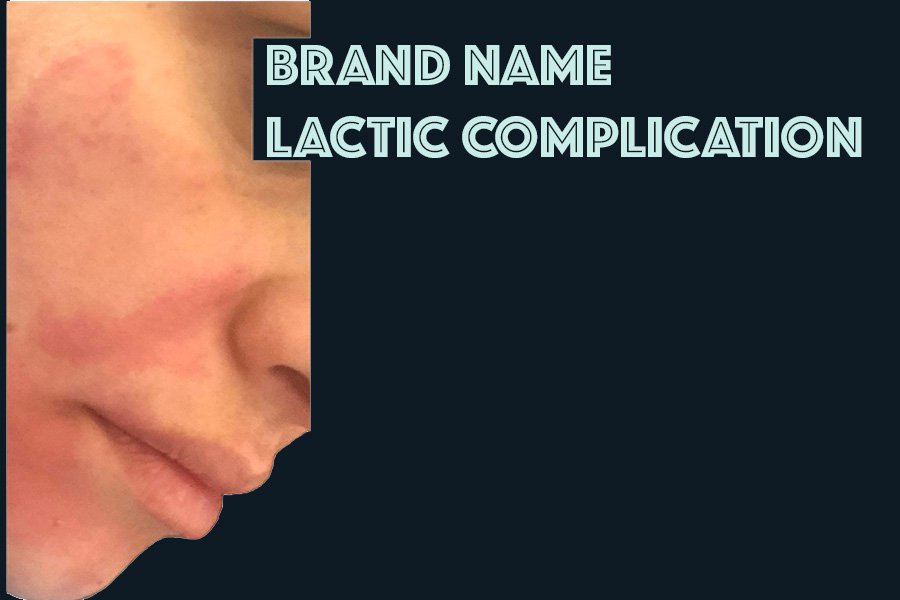
Example of complication related to poorly controlled peel chemistry (lactic acid)
Clinical example: irritation/complication associated with poorly controlled “marketing peels” (chemistry and protocol matter).

Clinical pitfall: “frosting” does not equal correct endpoint

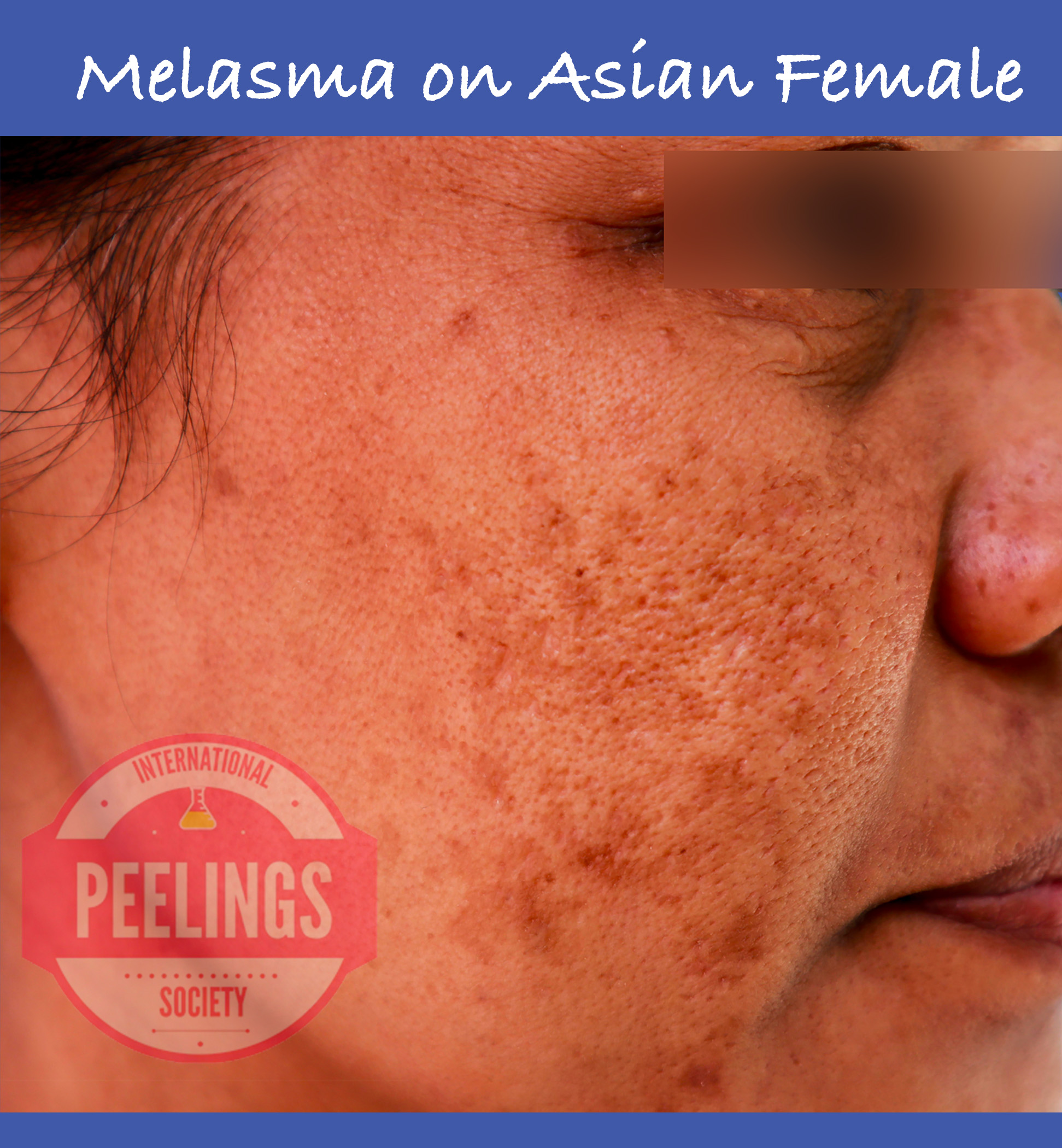
In melasma, chasing an intense, uniform frosting can worsen inflammation and trigger PIH. Correct management prioritizes controlled sessions, photoprotection without alcohols, and pigment-safe strategies over aggressive endpoints.
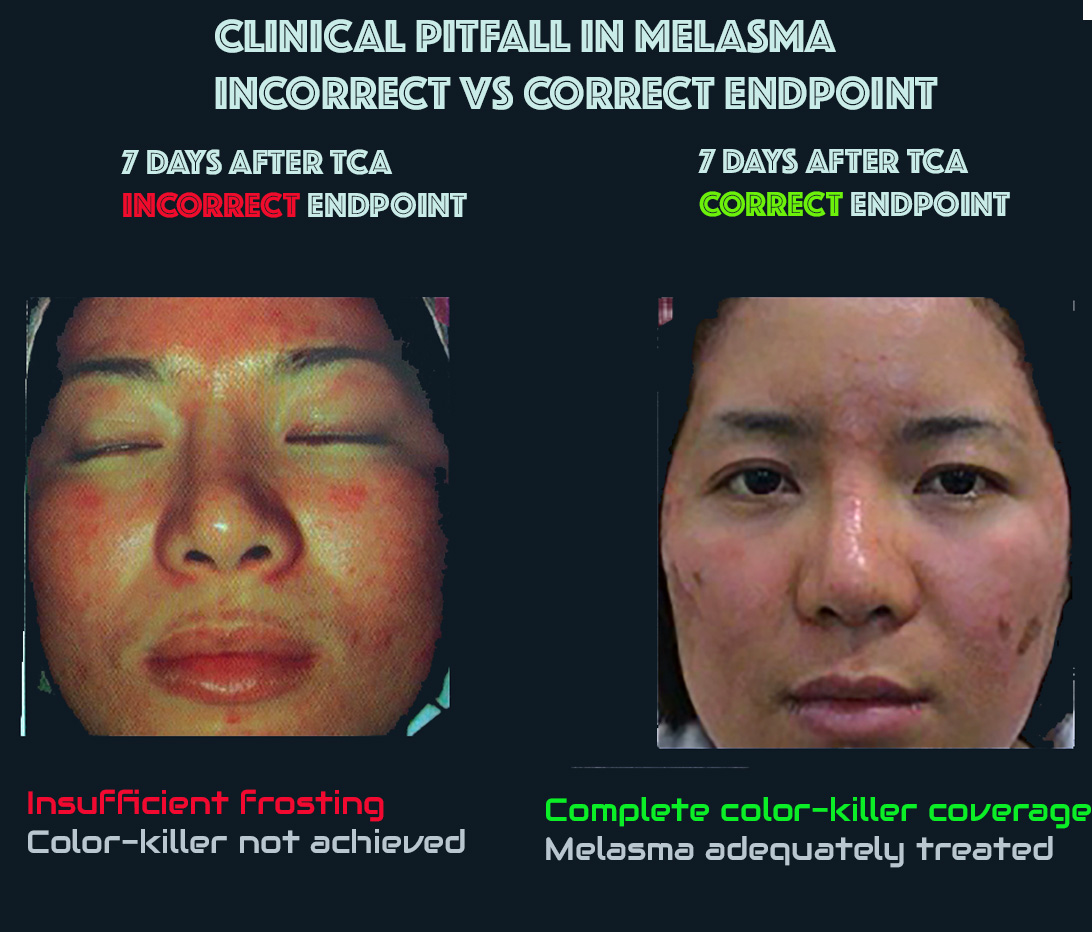
Clinical pitfall: frosting covering melasma may reflect incorrect treatment strategy
Clinical pitfall (melasma): incorrect endpoint selection can worsen pigmentation; correction requires a safer strategy.

Prevention: what reduces side effects the most

Before the peel

  • Accurate diagnosis (melasma vs PIH vs post-acne marks)
  • Phototype-based planning and realistic intensity
  • Skin preparation when indicated (barrier + pigment control)
  • HSV prophylaxis for patients with history of cold sores

After the peel

  • Strict sun avoidance + broad photoprotection without Alcohols
  • No friction, scrubs, waxing, or heat exposure
  • Use only clinician-approved recovery products
  • Avoid alcohol-based toners, perfumes, and “denatured alcohol” cosmetics
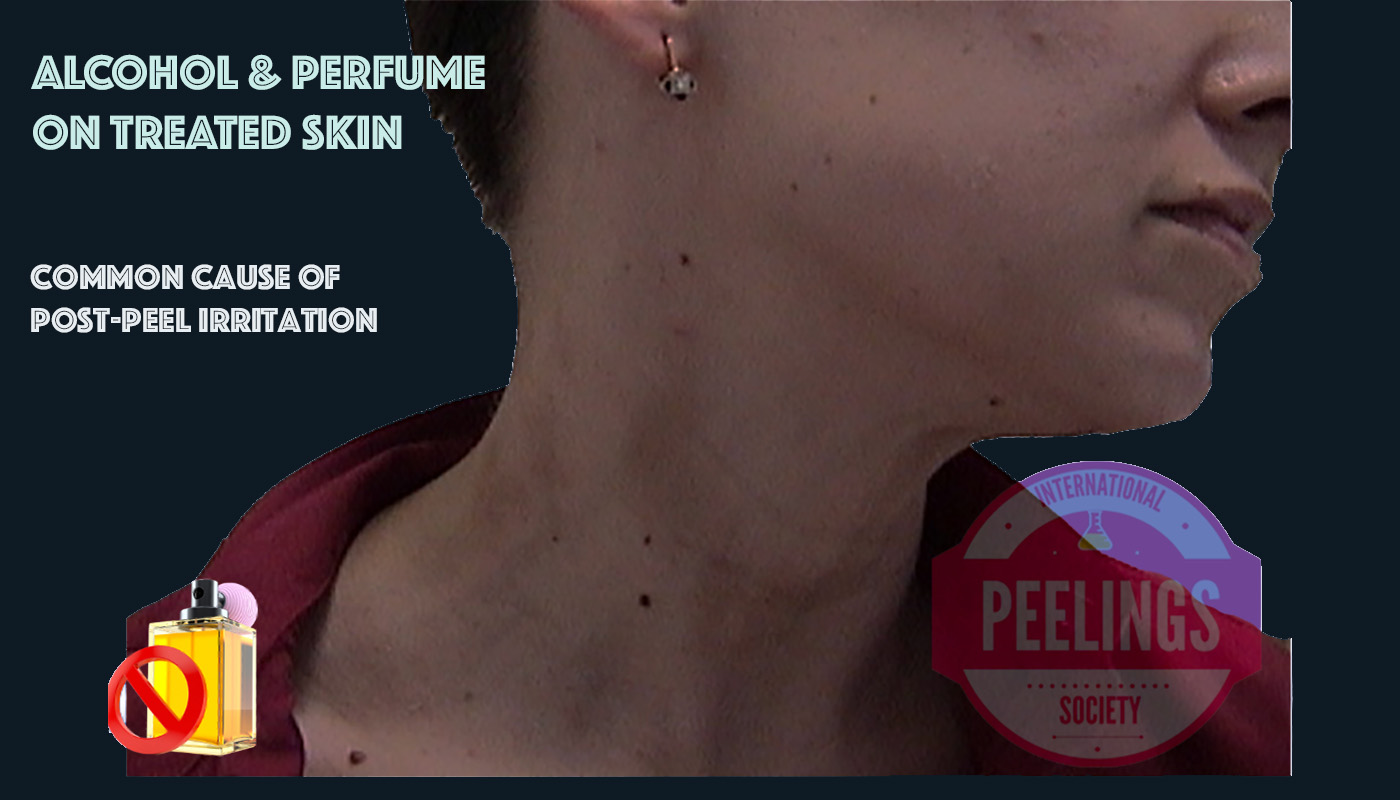
Alcohol/perfume on treated skin can trigger irritant reactions
Prevention point: alcohol-based cosmetics and perfume on recently treated skin can trigger severe irritation.
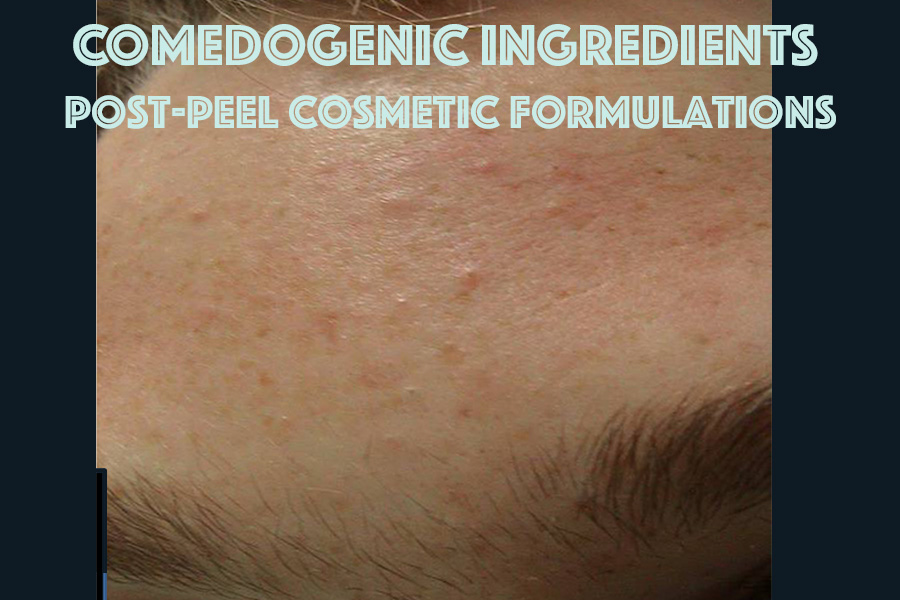
Comedogenic ingredients may trigger breakouts during healing
post-peel breakouts are often linked to cosmetic formulations containing highly comedogenic ingredients. Ingredient awareness is part of safety.

What to do if a reaction occurs

  1. Stop all active cosmetics (retinoids, acids, scrubs, “brightening” serums, fragrance).
  2. Cool compresses (short cycles) and barrier-only recovery care.
  3. Strict photoprotection without Alcohols and physical sun avoidance.
  4. If symptoms worsen: contact your clinician for assessment and tailored care.

Important: Do not “fix” a reaction by adding random products. Mixing acids, alcohol-based cosmetics, perfumes, or occlusives can amplify inflammation.

Downtime (“social eviction”): setting expectations is part of safety

Many negative experiences come from poor expectation management. A safe protocol includes: an explained recovery timeline, what is normal on day 1–3, and how many sessions are planned.
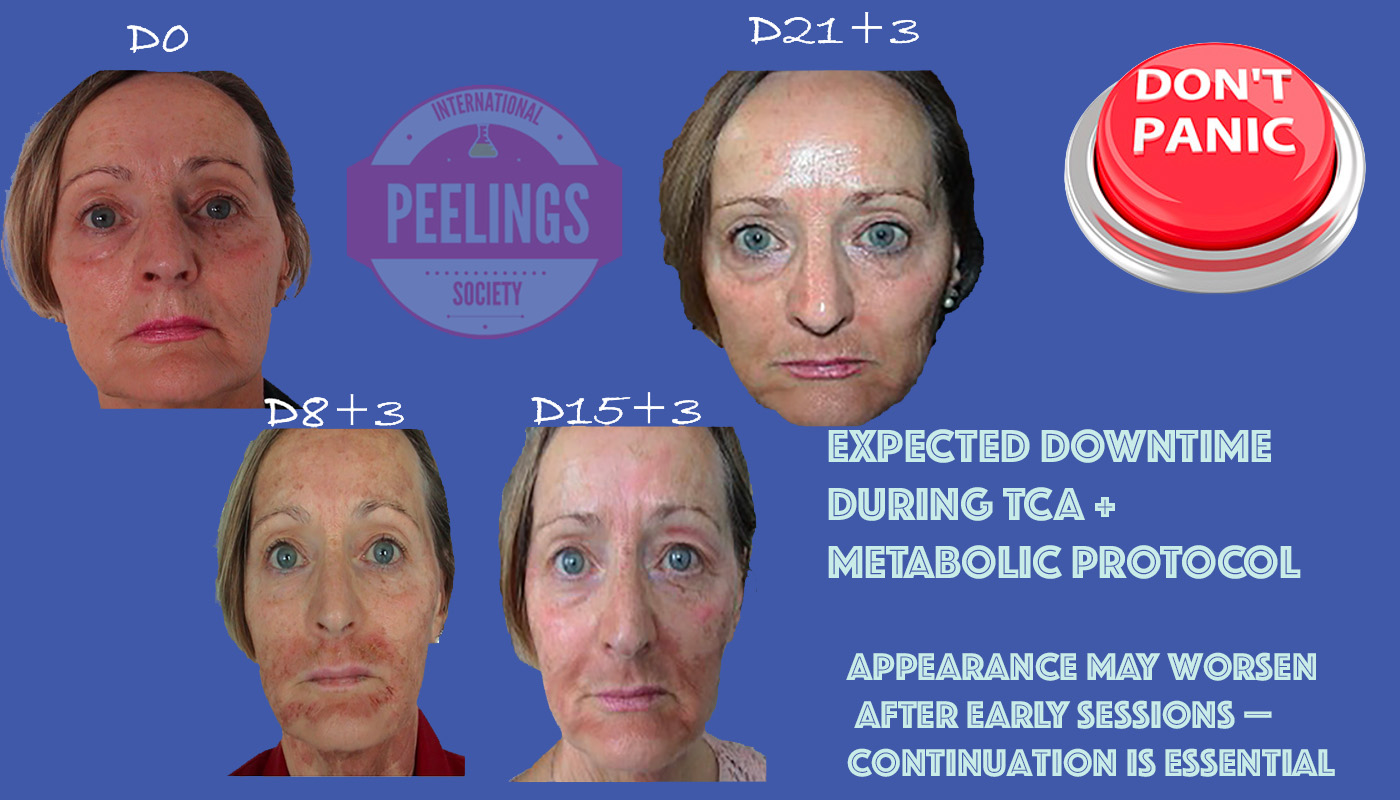
Downtime information and controlled recovery timeline
Expected downtime (Day +3 after each session): early sessions may appear progressively worse. This is expected. Continuation is essential; improvement typically starts after the 3rd–4th session.

Clinical case library: complications that were corrected

The examples below illustrate a consistent principle: when a strategy is wrong (too aggressive, wrong indication, poor chemistry control), skin outcomes can deteriorate. With a safer, protocol-guided approach, many cases can be corrected over time.
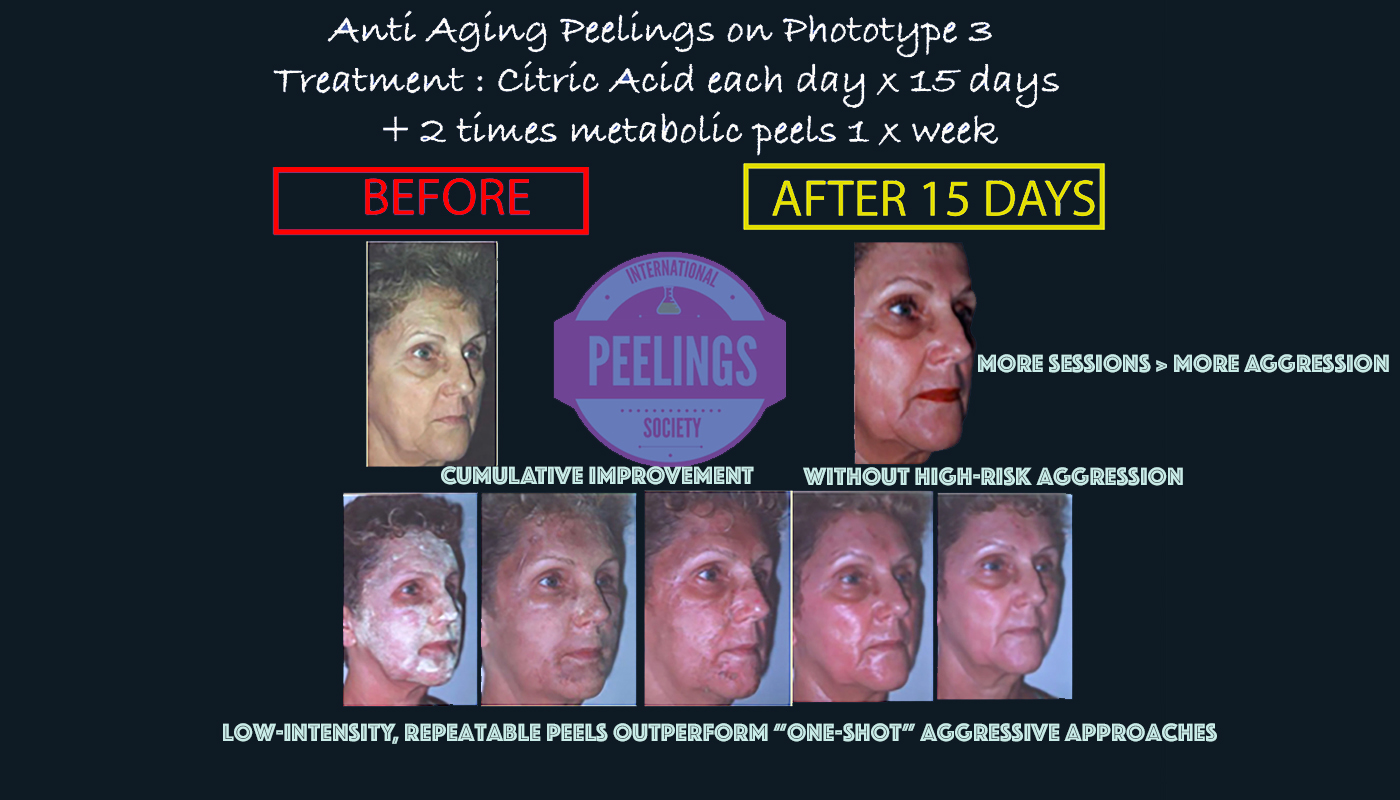
More sessions better than aggression: repeatable low-intensity protocol
Strategy matters: controlled repetition is often safer and more effective than a single high-risk aggressive session.
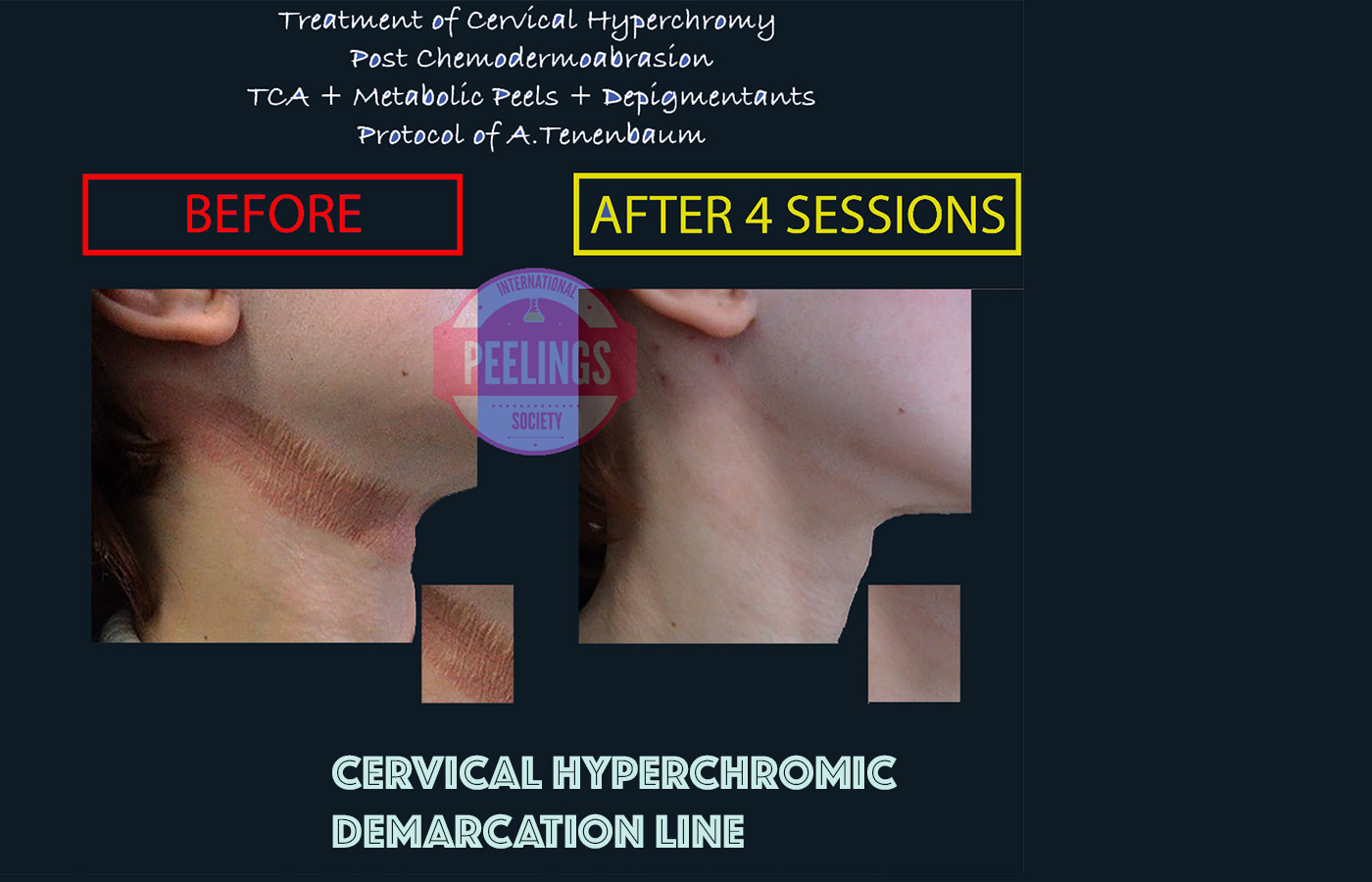
Cervical hyperchromic demarcation line before and after multi-session protocol
Cervical hyperchromic demarcation line
Progressive improvement after repeated TCA and metabolic peel sessions. Early sessions may appear worse; continuation of the protocol is essential for correction.

Take-home rules

  • Prefer protocol-guided peels over “one-size-fits-all” marketing peels.
  • Alcohol free Photoprotection is not optional—it is part of the treatment.
  • Avoid perfume, alcohol-based toners, and random active cosmetics during healing.
  • If pigmentation appears, do not intensify the peel—reduce inflammation first.

Need a safer plan?

If you experienced a reaction or want to reduce risk before starting a peel series, consider a clinician-guided approach. A correct diagnosis and recovery plan can make the difference.

Next steps

  • Review contraindications
  • Follow aftercare rules
  • Use approved recovery products
Continue reading

Ethical Use

Ethical Use of Chemical Peels

Chemical peels are clinical interventions that must be applied with professional responsibility. Ethical use requires a balance between patient safety, scientific rationale, and transparent communication, regardless of the clinical setting or product type.

This page provides general ethical and safety principles. It does not replace formal medical training, local regulations, or individualized clinical judgment.

Core ethical principles

  • Patient-centered care: choose the least aggressive solution capable of achieving the clinical objective.
  • Safety over performance: efficacy must never outweigh patient protection.
  • Scientific integrity: base indications on physiological rationale and documented observations.
  • Professional competence: act strictly within the scope of verified training and experience.
  • Transparency: communicate benefits, limits, and risks without exaggeration.

Ethical clinical decision-making

Ethical decision-making in chemical peeling requires an individualized evaluation of the patient, the skin condition, and the feasibility of adequate follow-up and aftercare.

  • Clear clinical indication and defined treatment objective.
  • Systematic screening for contraindications and risk factors.
  • Assessment of skin barrier status, phototype, and inflammatory activity.
  • Consideration of post-inflammatory hyperpigmentation risk.
  • Verification of patient compliance with post-procedure instructions.

Informed consent and patient communication

Ethical use implies that the patient fully understands what a chemical peel can and cannot achieve. Consent must be based on realistic expectations rather than promises or marketing narratives.

  • Explain the expected post-peel evolution (erythema, desquamation, recovery time).
  • Describe potential adverse effects, even if uncommon.
  • Clarify that outcomes vary between individuals.
  • Provide clear written aftercare and photoprotection instructions.

Professional responsibility and documentation

  • Use standardized protocols and document any deviation.
  • Record product type, concentration, application time, and endpoints.
  • Maintain traceability when relevant to the clinical setting.
  • Ensure staff are trained to recognize early warning signs.

Ethical boundaries and refusal of treatment

Ethical practice includes the ability to postpone or refuse a chemical peel when the risk-benefit balance is unfavorable or when adherence to aftercare is unlikely.

  • Active dermatitis or compromised skin barrier.
  • Recent excessive sun exposure.
  • Unrealistic expectations or external pressure.
  • Inability to comply with post-procedure care.

Educational content only. Chemical peels must be selected and applied according to the practitioner’s training, the patient’s condition, and applicable professional standards.

Continue reading

Safety & Ethics

Risk Management

Practical safety framework for chemical peeling: prevention, patient selection, aftercare, and incident response.

This page supports patient education and professional implementation. It does not replace medical judgment or local clinical protocols.

Clinical scope

Risk management in chemical peeling is a structured approach to reduce adverse events and improve outcomes through proper indication, contraindication screening, controlled technique, standardized aftercare, and preparedness for complications.

The goal is not “zero risk”, but predictable risk, transparent communication, and a documented pathway if something unexpected occurs.

Patient screening & eligibility

Most complications are preventable. Start with structured screening and conservative decision-making. When uncertain, defer treatment and reassess.

Higher-risk profiles

  • History of hypertrophic scars or keloids
  • Active dermatitis, infection, or impaired skin barrier
  • Recent aggressive procedures (laser, deep peel, dermabrasion)
  • Uncontrolled inflammatory acne or excoriations

Medication & exposure factors

  • Photosensitizing drugs (evaluate timing and risk)
  • Recent tanning or planned UV exposure
  • Topicals increasing irritation without proper washout
  • Inconsistent adherence to aftercare

Do not proceed if

  • Photoprotection cannot be followed strictly
  • Open wounds, erosions, or severe inflammation are present
  • Infection is suspected
  • Patient requests unsafe intensity or “rush treatment”

Informed consent is not a form—it’s a documented clinical conversation. The patient must understand the expected course, the risks, and the aftercare obligations.

Minimum points to cover

  • Expected course: transient erythema, tightness, sensitivity, possible flaking
  • Common risks: irritation, prolonged redness, PIH, acne flare
  • Less common: infection, persistent dyschromia, scarring (rare)
  • Alternatives: staged approach, topical care, no treatment
  • Aftercare requirements and strict sun avoidance/protection
  • Red flags and how/when to contact the clinician

Tip: document baseline photos and the agreed intensity/pacing strategy.

Procedure safety basics

  • Start conservative: lower intensity, staged progression.
  • Standardize prep: cleansing, barrier protection, timed application.
  • Control variables: product choice, contact time, passes/zones, neutralization if applicable.
  • Zone awareness: thinner skin areas require lower intensity (perioral/periocular/neck).
  • Stop rules: unexpected severe pain, rapid edema, focal intense reaction → stop and reassess.

Documentation checklist

  • Baseline photos (standard angles/light)
  • Skin type, indication, risk factors
  • Product + batch/lot (when available)
  • Parameters: time, passes/layers, zones
  • Aftercare given + follow-up plan

Post-procedure care that reduces complications

Aftercare is a safety intervention. Many pigmentary and irritation-related complications are driven by UV exposure, friction, and premature reintroduction of active products.

Do

  • Use gentle cleansing and maintain barrier support as instructed
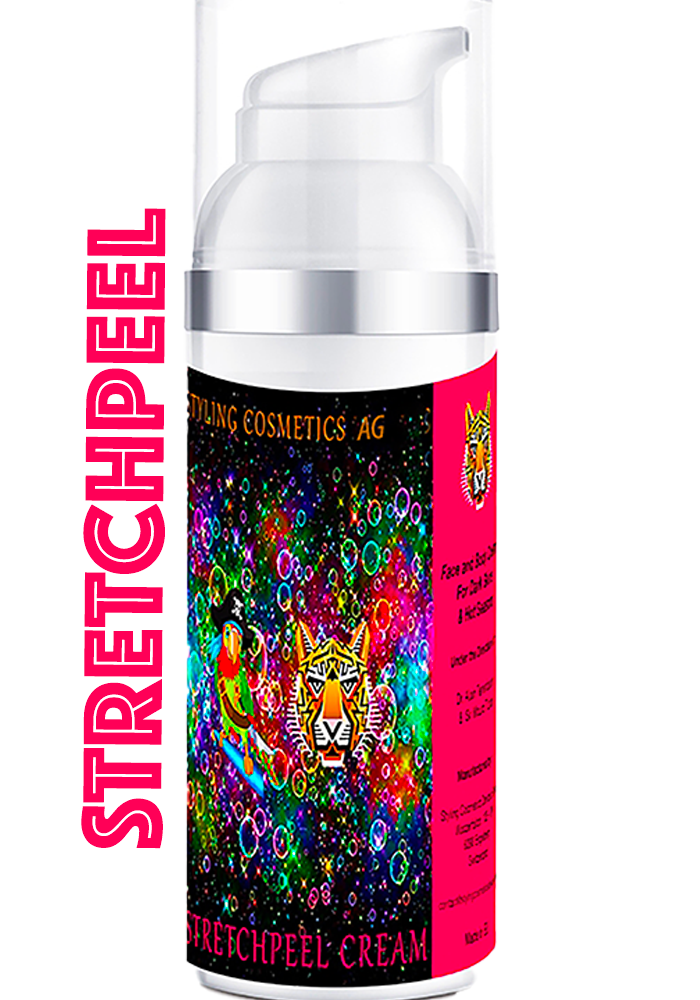
  • Use StretchPeel as the dedicated photoprotective and barrier-support product, particularly during the post-peel recovery phase
  • Keep the skin hydrated and protected; avoid friction and mechanical stress
  • Respect the planned timeline for skincare reintroduction

Avoid

  • Direct sun exposure, tanning, sauna/steam, or intense heat during the advised period
  • Alcohol-based or irritating formulations during the recovery phase
  • Retinoids, acids, or exfoliants until explicitly cleared by the clinician
  • Self-managing adverse reactions with non-recommended products
  • “Stacking” procedures or accelerating the treatment schedule

Complications & red flags

  • Expected reactions vs warning signs

    Often expected: mild-to-moderate redness, tightness, transient sensitivity, light flaking.

    Red flags: severe pain, rapidly increasing swelling, blistering, spreading redness, fever, honey-colored crusts, grouped vesicles, eye involvement, or worsening after initial improvement.

  • Post-inflammatory hyperpigmentation (PIH)

    PIH risk increases with inflammation, friction, premature actives, and UV exposure. Prevention: conservative pacing, barrier support, and strict photoprotection.

  • Infection suspicion

    Rapidly worsening pain, pustules, crusting, grouped vesicles, or systemic symptoms requires prompt clinical evaluation. Do not “wait it out”.

  • Persistent erythema or prolonged irritation

    Usually linked to barrier disruption or premature actives. Simplify routine, reinforce barrier, and reassess intensity/interval before the next session.

Incident response workflow (SOP)

  1. Stop the procedure if an unexpected reaction occurs; document immediately.
  2. Assess severity (pain, edema, blistering, systemic symptoms, ocular risk).
  3. Stabilize according to your clinic’s medical protocol.
  4. Escalate early when red flags are present (same-day evaluation / urgent pathway).
  5. Document parameters, timing, photos, products used, instructions given.
  6. Follow-up proactively (24–72h depending on severity).
  7. Review root cause and update screening/pacing/aftercare protocol.

Clinics should maintain clinician-approved emergency procedures and escalation pathways.

Safety & ethics commitments

Patient-first decisions

We promote conservative planning, staged protocols, and realistic expectations over aggressive “one-visit” intensity.

Transparency

Patients deserve clear information about benefits, limitations, downtime, and risks—before starting.

Professional accountability

Training, documentation, and follow-up are part of ethical care. When in doubt: defer, reassess, or refer.

Need support for protocol planning?

For professional guidance, structured protocols, and safety resources, contact our team.

Contact

If you suspect an urgent complication, seek immediate in-person medical evaluation.

Continue reading

The Science of Chemical Peels

The Science of Chemical Peels

Chemical peeling is not a cosmetic “skin flaking” event. It is a controlled clinical technique in which chemistry is used to trigger a predictable biological response — improving texture, tone, pigment homogeneity, and skin quality through targeted renewal pathways.

This page explains the core scientific principles that determine outcomes: why chemical descriptors alone do not predict efficacy, why “superficial/medium/deep” is not a reliable universal label, and why modern peeling science is increasingly shifting from destructive injury toward metabolic regulation.

What is a Chemical Peel

A clinical technique — not merely a skin-flaking process.


what-is-a-chemical-peel

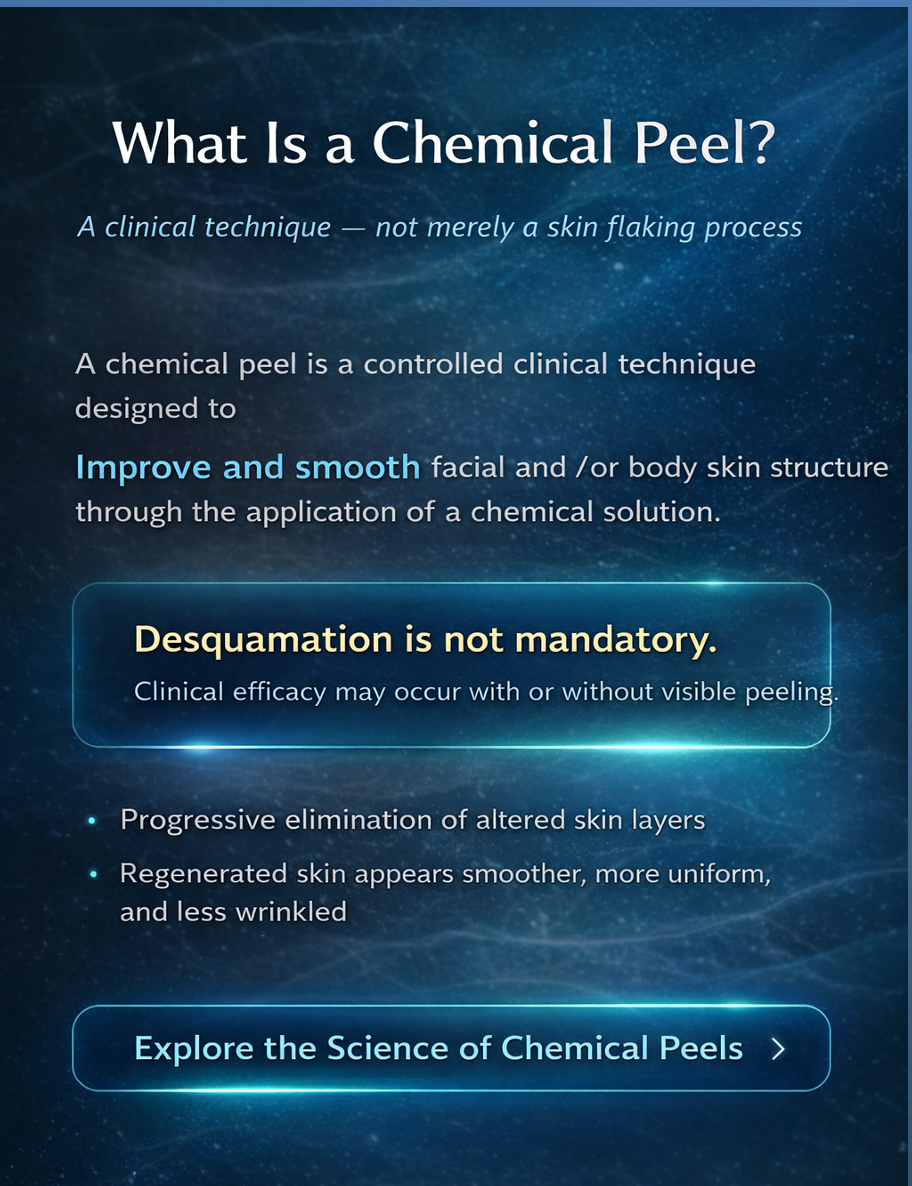
A chemical peel is a controlled clinical technique designed to improve and smooth facial and/or body skin structure through the application of a chemical solution.

In modern practice, efficacy is evaluated by biological response and clinical endpoints—not by how much peeling is visible.

Desquamation is not mandatory.

Clinical efficacy may occur with or without visible peeling.

  • Progressive elimination of altered superficial skin layers
  • Regenerated skin may appear smoother, more uniform, and less wrinkled

Mechanisms of Action

Chemical parameters (e.g., pKa, ionization, vehicle) describe how an acid behaves in solution and how it may be delivered. Clinical outcomes, however, are determined by tissue biology: signaling, metabolic adaptation, and regulated inflammation.

Chemistry initiates the stimulus

  • pKa informs ionization and acid–base equilibrium
  • Anticipates chemical reactivity under defined conditions
  • Contributes to exposure and delivery
  • Does not define the clinical endpoint
pKa is a chemical descriptor—not a clinical predictor.

Biology determines the response

  • Activates cellular signaling pathways
  • Drives metabolic adaptation
  • Modulates inflammation
  • Shapes long-term tissue response
Efficacy is a biological phenomenon.

Clinical outcome is the final integration

  • Emerges from biological regulation
  • Not inferred from visible injury
  • Depends on tissue type and anatomy
  • Reflects adaptive balance
Same stimulus → different outcomes.
Key principle: chemistry defines the stimulus; biology defines the result. pKa helps us understand acids, but it does not predict biological efficacy.

A simple analogy: why chemical descriptors do not predict clinical outcome

pKa can be compared to an aggressor delivering a punch. Biology represents the victim, and the clinical outcome reflects the final consequences.

The same punch will not produce the same biological effects if it strikes the buttocks, the nose, or the sternum. Severity depends on the tissue involved—its structure, vulnerability, and biological response.

In the same way, pKa describes chemical aggression, but clinical efficacy and risk are determined by tissue biology, not chemical strength alone.

— A.TENENBAUM

Classification of Peels

Why “Superficial / Medium / Deep” Is Not a Reliable Classification

A depth-only classification assumes that the same peel reaches the same layer everywhere. In real clinical practice, this assumption is anatomically false and may become unsafe.

The same peel does not behave the same across the face

Facial skin thickness and barrier properties vary significantly by anatomical subunit. As demonstrated in practical peel mapping approaches, a single acid formulation may act:

  • Deeper on thin areas (e.g., eyelids, periorbital region)
  • More superficial on thicker, more sebaceous areas (e.g., nasal tip)
  • Heterogeneously within the same zone (e.g., crow’s feet with multiple thickness gradients)

Therefore, the labels “superficial”, “medium”, or “deep” cannot be treated as intrinsic properties of a product. They are at best context-dependent outcomes.

Clinical safety point: If practitioners rely on depth labels as if they were universal, they may unintentionally over-treat thin regions or under-treat thick regions. This is one reason why a modern peeling framework must incorporate anatomy + technique + formulation.

The Tenenbaum–Tiziani approach

Instead of classifying peels by a fixed “depth category”, we use a framework based on:

Chemistry

pKa profile, mono/di/tri-protic behavior, formulation design.

Modulation

pH as a variable; coats, contact time, repetition, buffering.

Anatomy

Zone-specific thickness gradients and barrier differences across the face.

This approach explains real-world outcomes and supports safer, more predictable clinical protocols.

Educational note: This page provides scientific orientation and does not replace formal training, clinical judgment, or individualized patient assessment.

Why pKa Does Not Define Peel Depth

pKa is a chemical constant describing acid dissociation. It does not define how deep a peel will act in vivo. Clinical depth results from the interaction between formulation pH, application technique, and local skin anatomy.

This is why acids with similar pKa values may produce very different clinical behaviors across different facial zones, and why depth cannot be predicted from chemistry alone.

Metabolic vs Destructive Approaches

Traditional chemical peels were historically defined by “controlled injury”. Modern clinical science increasingly favors controlled biological regulation aimed at renewal, pigment stabilization, and skin homeostasis — often with less downtime and improved tolerability.

Destructive (Injury-Driven) Peels

The clinical intent is to create a stronger acute reaction to force a repair process. Results depend heavily on wound healing dynamics and post-procedure management.

  • Primary driver: controlled tissue injury → repair
  • Typical endpoints: frosting, visible peeling, erythema
  • Clinical profile: higher downtime and variability
  • Risk sensitivity: anatomy, technique, aftercare

Key limitation: visible intensity does not guarantee superior biological outcomes and may increase irritation or PIH risk.

Metabolic (Regulation-Driven) Peels

The intent is not to “burn deeper”, but to trigger a controlled metabolic shift supporting epidermal renewal, inflammation moderation, and pigment balance.

  • Primary driver: biological regulation → renewal
  • Typical endpoints: improved tone/texture with minimal peeling
  • Clinical profile: reduced downtime, progressive outcomes
  • Protocol logic: modulation (pH, coats, timing)

Clinical advantage: results without making desquamation a mandatory endpoint, improving tolerability across skin types and zones.

This is not “weak vs strong” — it is intent and control

The difference between metabolic and destructive approaches is a clinical strategy, integrating chemistry, modulation, and anatomy.

Chemistry

What the acid can do on paper.

Modulation

How penetration and response are controlled.

Anatomy

Where the peel is applied and how skin thickness varies.

Practical takeaway (non-protocol)

  • Downtime is not a KPI of efficacy.
  • Depth is context-dependent.
  • Predictable regulation often beats single-session aggression.

Educational note: This overview provides scientific orientation and does not replace individualized patient assessment or protocol-based professional training.

Continue reading

Home

Chemical Peeling
A scientific and clinical reference for professional skin treatments

la-fata.

Evidence-based chemical peel formulations and protocols for physicians and qualified aesthetic practitioners.

For Professional Use

  • pgysician

    Physicians

    Designed for dermatologists, aesthetic physicians, plastic surgeons, and post-graduate medical training.

    – Evidence-based protocols
    – Clinical indications and safety
    – Advanced chemical peel formulations

    Access Medical Content

  • Qualified Aesthetic Practitioners

    For trained aesthetic professionals working within a structured and safety-oriented clinical framework.

    – Skin indications and treatment logic
    – Professional-use formulations
    – Practice-oriented guidance

    View Professional Pathway

The Science of Chemical Peels

  • Chemical peels are medical tools that interact with skin biology, metabolism, and tissue response.
  • Their clinical value depends on understanding mechanisms of action, indications, and safety principles.
  • what-is-a-chemical-peel

    What Is a Chemical Peel?

    Medical definition, scope of action, and distinction between cosmetic exfoliation and clinical peeling.

    Fundamental Concepts

  • mechanisms-of-action

    Mechanisms of Action

    How chemical agents interact with epidermal, dermal, and metabolic processes.

    Biological Mechanisms

  • classification-chemical-peels

    Classification of Peels

    Superficial, medium, and advanced peels according to depth, agents, and tissue response.

    Clinical Classifications

  • metabolic-vs-destructive-approaches

    Metabolic vs Destructive Approaches

    Comparing bioenergetic, regulatory approaches with purely destructive chemical peeling.

    Metabolic vs Destructive Models

Explore the Science

Clinical Indications

Chemical peels are applied across a wide range of clinical indications

when selected and performed within an appropriate professional framework.

View All Clinical Indications

Professional Chemical Peel Formulations

Our formulations are developed for professional use and integrated within structured clinical protocols, ensuring coherence between indications, mechanisms, and safety.

  • Superficial Peels

    Designed for controlled superficial action depending on indication, protocol, and anatomical area.

    Explore Superficial Peels

  • Medium & Advanced Peels

    Used for advanced indications, where tissue interaction depends on clinical context and practitioner expertise.

    Explore Advanced Peels

  • Metabolic & Bioenergetic Solutions

    Approaches focused on metabolic regulation rather than purely destructive mechanisms.

    Explore Metabolic Solutions

These categories are functional. Real depth depends on anatomy and protocol. Learn why.

For professional use only.

Safety, Ethics & Clinical Responsibility

Chemical peeling requires appropriate patient selection, risk management, and ethical clinical practice.

Education & Post-Graduate Teaching

ChemicalPeeling.com supports medical and professional education through structured content, training programs, and participation in scientific events.

  • Courses & Workshops

    Professional training programs covering chemical peel indications, protocols, and clinical application.

    View Training Programs

  • Scientific Publications

    Peer-reviewed articles, clinical insights, and scientific references related to chemical peeling.

    Browse Publications

  • Congresses & Lectures

    Participation in national and international scientific meetings and post-graduate teaching.

    Scientific Meetings

Access Educational Content

Continue reading

Comparison Table : TCA vs. Salicylic Acid for Hyperpigmentation used as ,,Color Killers,,

Comparison Table : TCA vs. Salicylic Acid
for Hyperpigmentation

Feature TCA Salicylic Acid

Type of Acid


TCA

BHA

Mechanism of Action


  • Exfoliation
  • water-soluble
  • Stimulates collagen production
  • Superficial exfoliation
  • oil-soluble
  • penetrates pores

Target Area


  • Deeper pigmentation
  • Melasma
  • Sun spots
  • Superficial pigmentation
  • PIH

Penetration Depth


  • Medium depth  
  • Superficial to medium depth  

Suitable for Skin Types


  • Thicker skin types
  • Severe pigmentation
  • Oily skin types
  • Acne-prone skin
  • Superficial ,,light,,pigmentation

Frequency of Treatment


  • 4 treatments
  • spaced 1-2 weeks
  • Can be used more frequently
  • 2 times a week or
  • 2 times per month

Main Benefits


  • Reduces deeper pigmentation
  • Stimulates collagen production
  • Improves skin texture
  • Prevents clogged pores
  • Brightens skin

Side Effects


  • Redness
  • Swelling
  • Scabbing
  • Mild redness

Back to Protocol Hyperpigmentation

Back to Protocol Melasma

Back to Understanding Melasma

Continue reading

AHA vs BHA

AHA vs BHA

AHA BHA

Acid


  • Citric Acid
  • Lactic Acid

Salicylic Acid

Solubility


Water Soluble

Oil Soluble

Target


Surface Exfoliation

Penetrates deeper
into the Pores

Actions


  • On Skin surface
  • Remove Skin Dead cells
  • Improve Texture
  • Hydrate the Skin ( citric acid)
  • Dissolve Sebum
  • Clear Clogged Pores
  • Reduce Inflammation
  • Comedolytic Properties

Effectiveness


  • On Dry Skin
  • On Sun Damaged Skin
  • On Mature Skin
  • On Acne Prone
  • On Oily Skin
  • On Black Heads

For Dark Skin Types


Better Tolerated 

Image Product AHA Ingredients Link
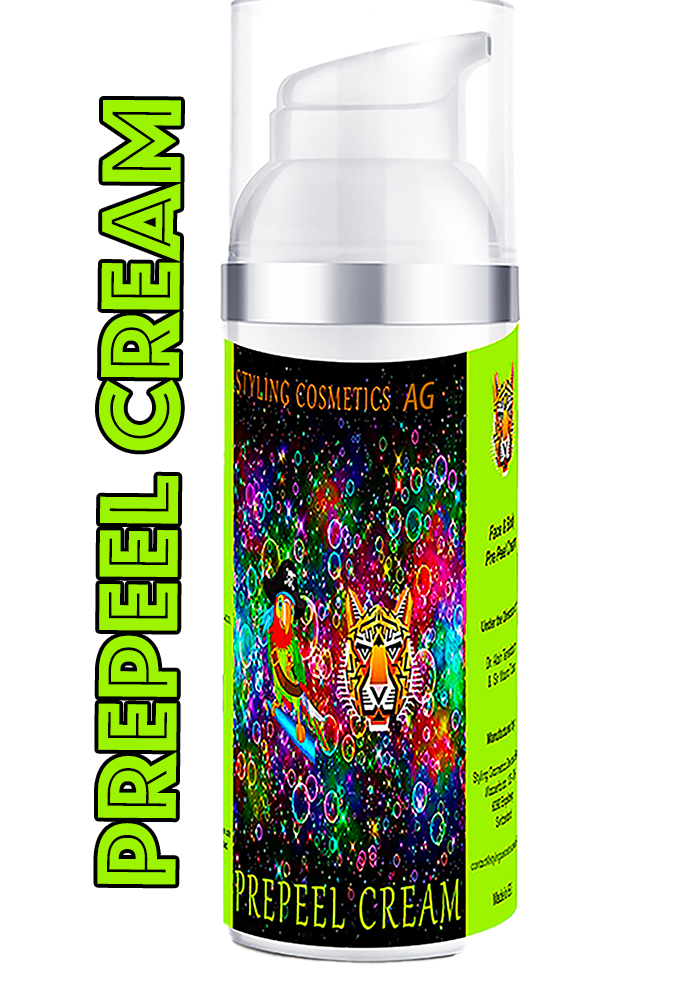
prepeel cream

PrePeel Cream
Best Seller with 3 AHA


  • Citric Acid
  • Tartaric Acid
  • Malic Acid
Take a Look
papaya-cream

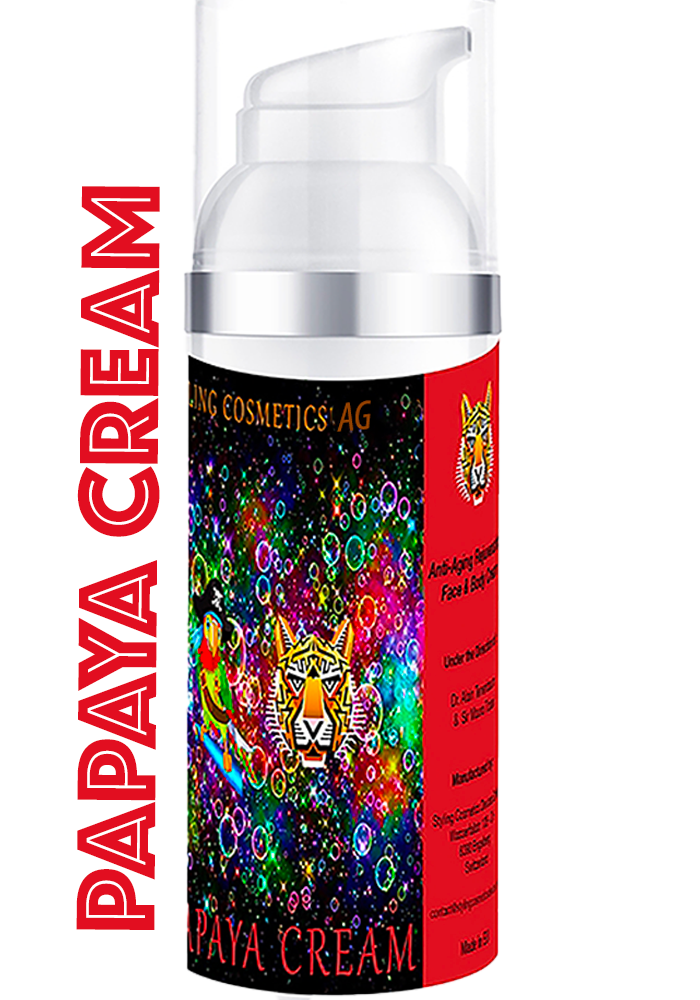
Papaya Cream
Best Seller with 2 AHA


  • Citric Acid
  • Glycolic Acid
Take a Look
stretchpeel

StretchPeel


  • Citric Acid
Take a Look
microabrasive-sand-cream

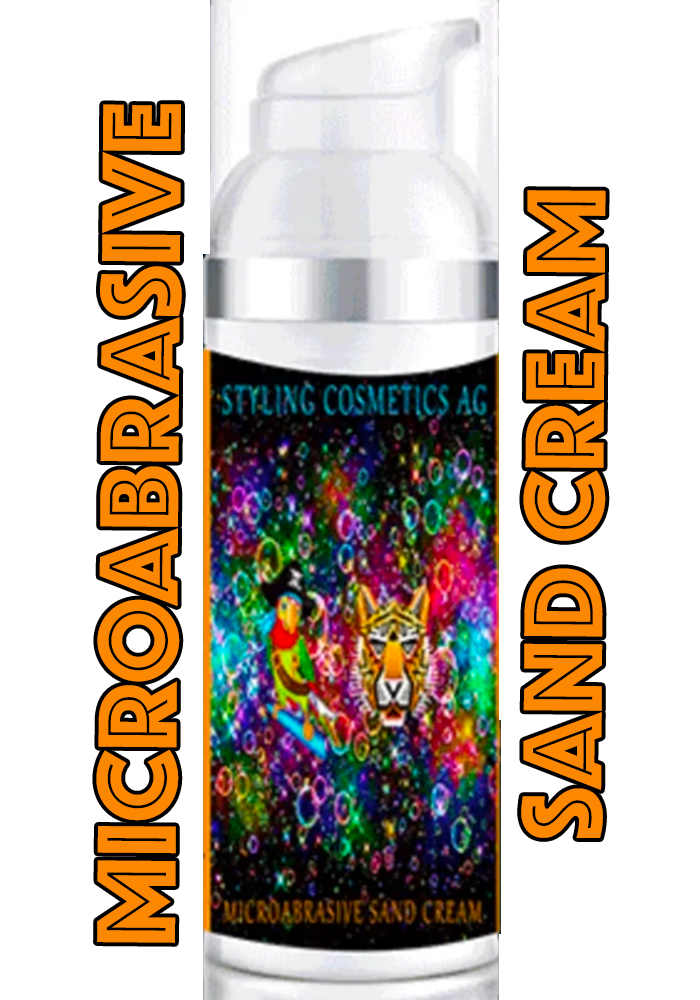
Microabrasive Sand Cream


  • Glycolic Acid
Take a Look
lipoic-acid

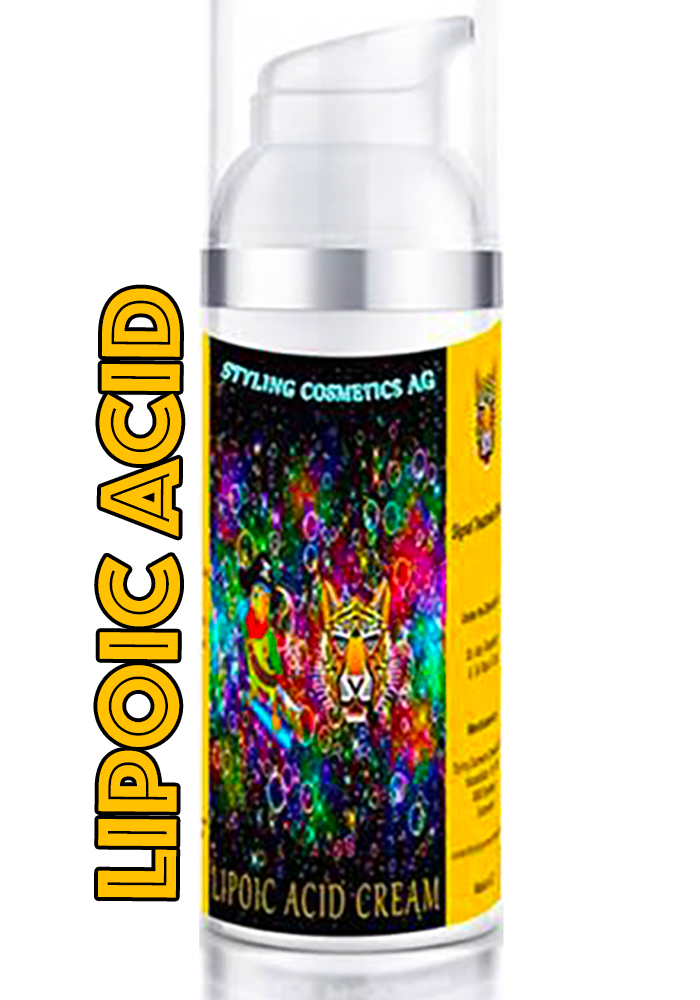
Lipoic Acid Cream


  • Citric Acid
Take a Look
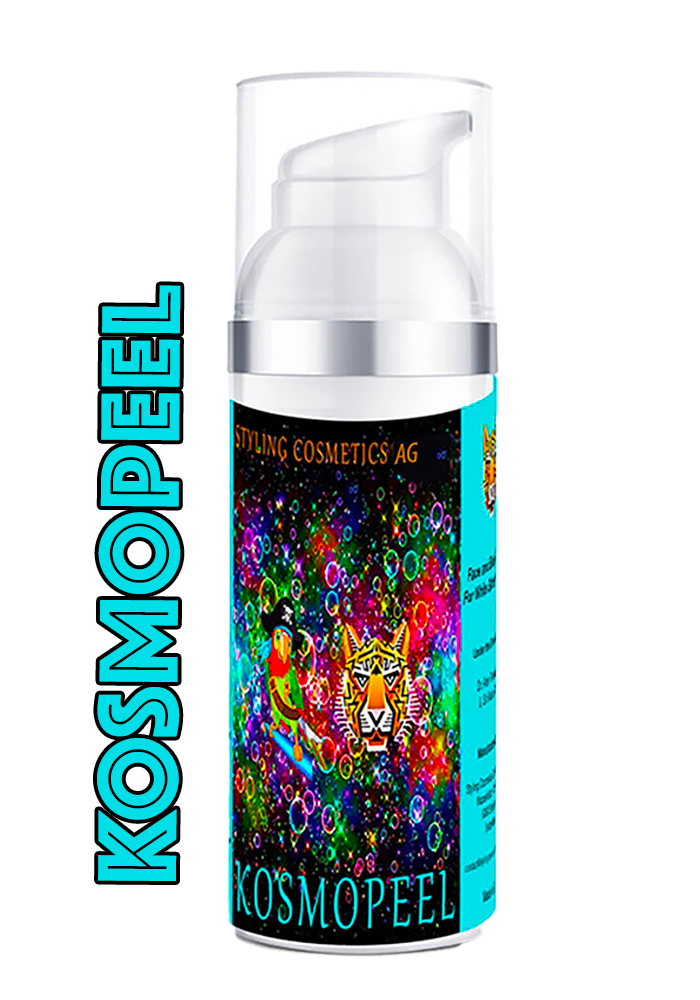
kosmopeel

KosmoPeel


  • Citric Acid
Take a Look
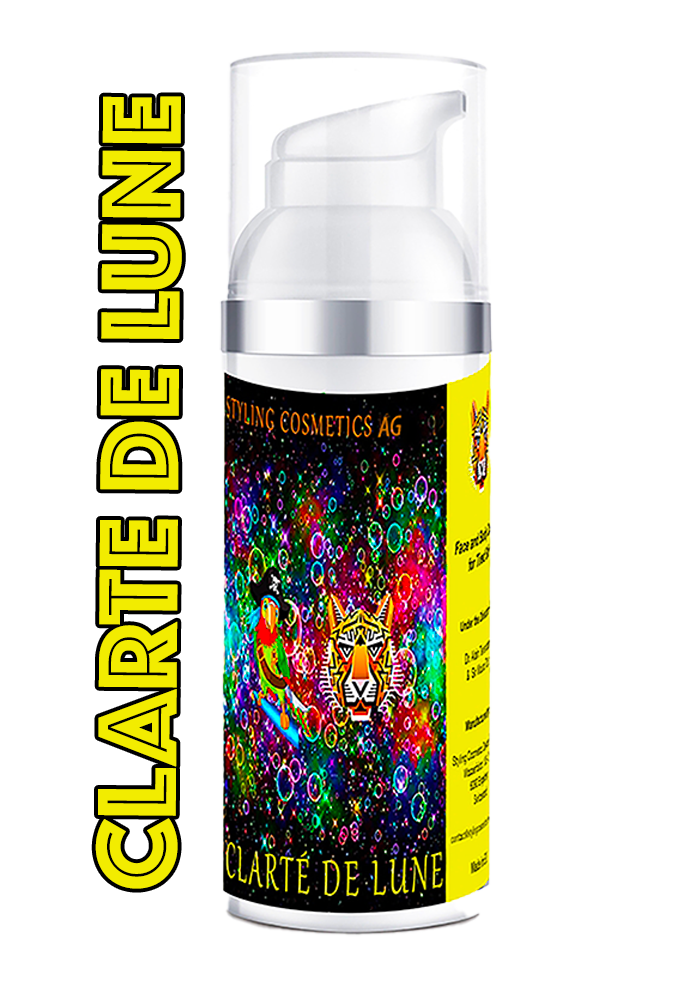
clarte de lune

Clarté de Lune


  • Citric Acid
Take a Look
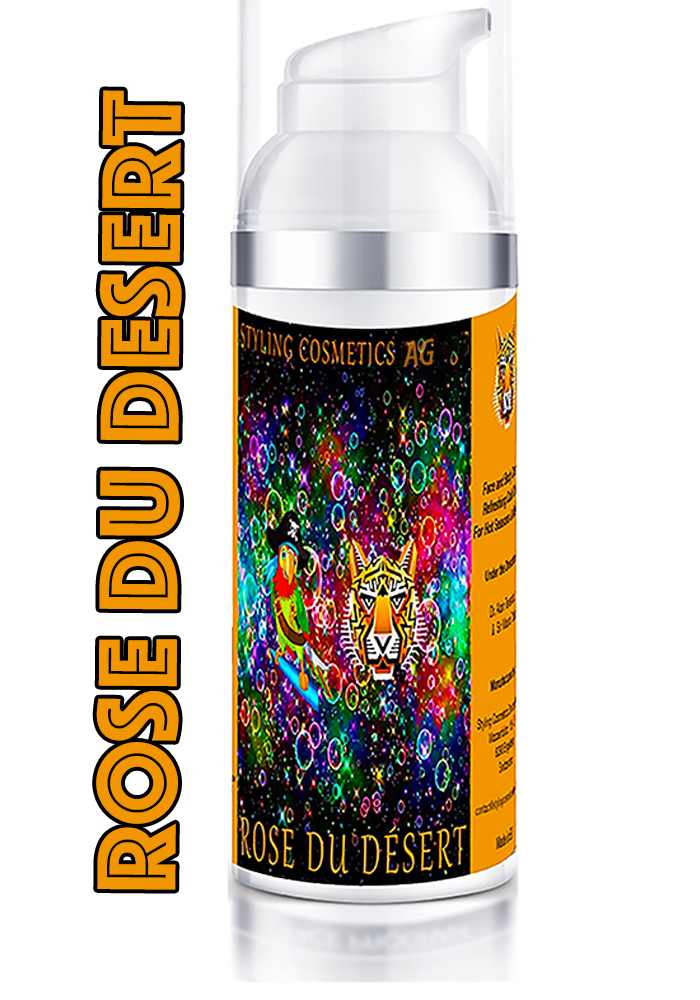
rose du desert

Rose du Désert


  • Citric Acid
Take a Look

Continue reading

Contact

Contact

Mauro Tiziani ,creator of these products is at your service

mauro-tiziani-office

Continue reading

Share this website on your social medias