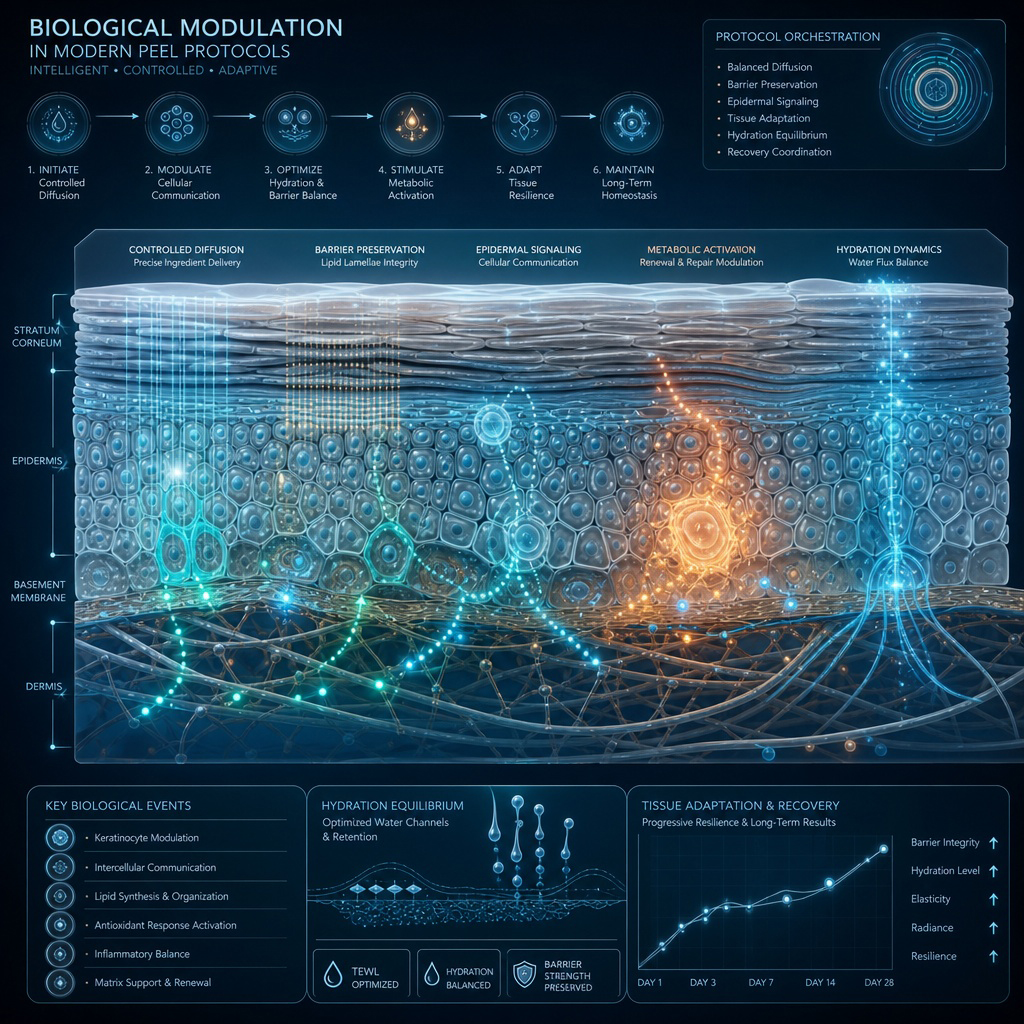
Core Science · TEWL and Barrier Retention

Trans-Epidermal Water Loss (TEWL) and
Barrier Retention

Skin hydration is not only about adding water. It depends on the skin’s ability to retain water while limiting trans-epidermal water loss.

Understanding the balance between water loss, water retention and barrier integrity is essential in chemical peeling and skin recovery.

TEWL Barrier Control Water Retention Stratum Corneum
Water Loss
Retention
Trans-epidermal water loss describes the escape of water through the epidermal barrier, while barrier retention reflects the skin’s capacity to preserve hydration within the stratum corneum.
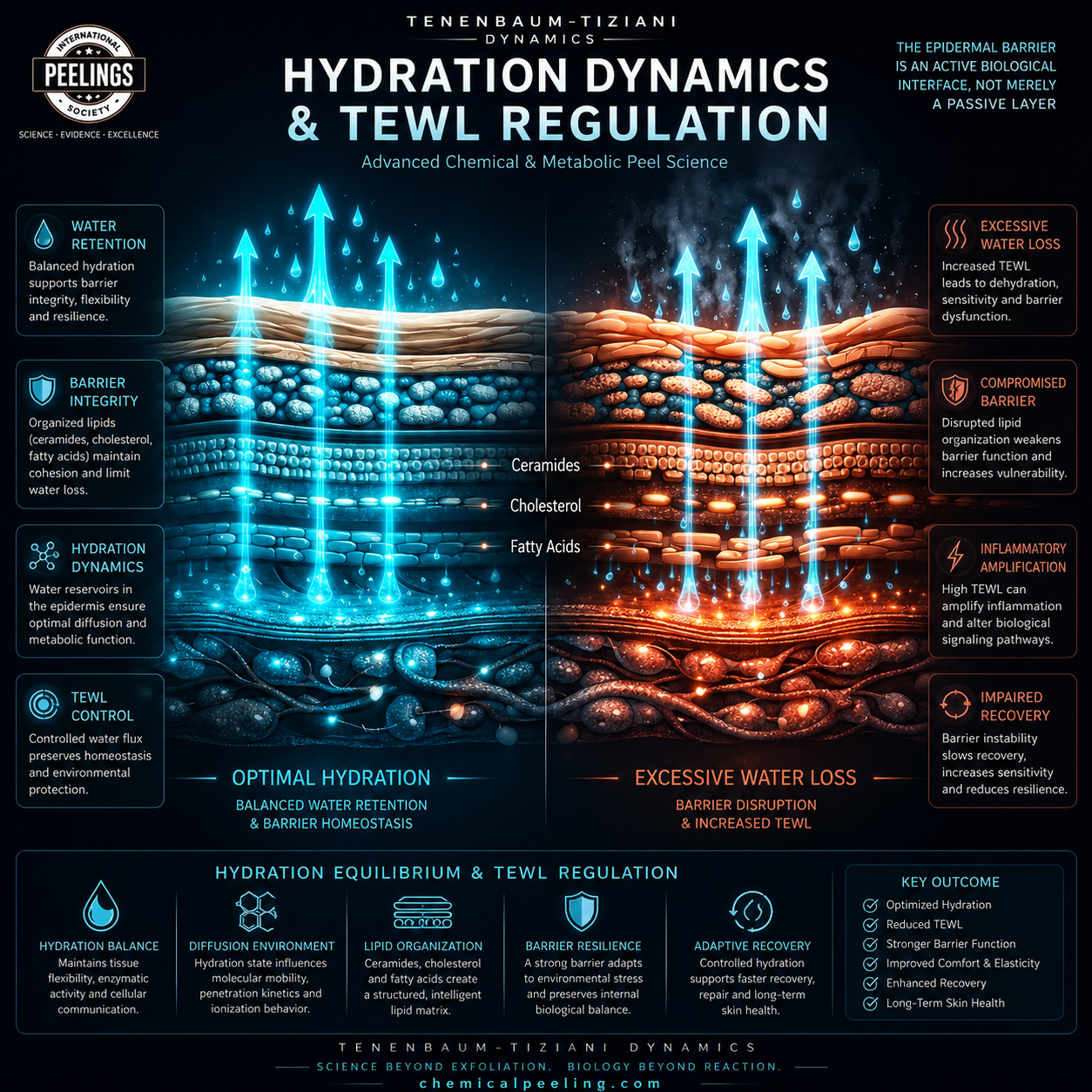
TEWL describes the passive escape of water through the epidermal barrier.
Section 2 · Definition

What Is TEWL?

TEWL, or Trans-Epidermal Water Loss, refers to the passive diffusion of water from deeper skin layers toward the external environment.

It is not a measure of how much water has been added to the skin. It is a functional indicator of how effectively the epidermal barrier limits unnecessary water escape.

Core principle

A higher TEWL generally reflects a weaker or more permeable barrier, while a lower TEWL suggests better barrier control.

TEWL = water loss It measures escape, not hydration storage.
Barrier-dependent It depends strongly on stratum corneum integrity.
Clinically relevant It increases when the barrier is disturbed, fragile or recovering.
Section 3 · Water Retention

What Is Water Retention?

Water retention describes the ability of the stratum corneum to keep water within its superficial layers instead of letting it evaporate too rapidly.

Unlike TEWL, which describes water escaping outward, water retention refers to the skin’s capacity to hold water through corneocyte organization, natural moisturizing factors and a coherent lipid environment.

Core principle

Well-retained water improves softness, flexibility and surface comfort, but it does not automatically mean that the barrier is fully restored.

Corneocytes Act as structured water-holding units within the stratum corneum.
NMF Natural moisturizing factors support internal water binding and comfort.
Lipid Matrix Helps organize the barrier environment around hydrated corneocytes.
Water retention depends on organized corneocytes, natural moisturizing factors and a stable barrier environment.
Section 4 · Functional Comparison

Water Loss vs Water Retention

These two mechanisms are often confused, yet they describe completely different physiological processes. One reflects escape of water, the other reflects capacity to maintain it.

TEWL measures water escaping outward, while retention describes the ability to keep water within the stratum corneum.
TEWL Water Loss
  • Physiology Passive diffusion of water toward the external environment
  • Location Intercellular lipid barrier
  • Clinical Meaning Reflects barrier integrity
  • Typical Situation Increased after peeling or barrier disruption
  • Correction Strategy Lipid support and barrier restoration
Loss
Retention
Water Retention Hydric Capacity
  • Physiology Water maintained within corneocytes
  • Location Stratum corneum cellular structure
  • Clinical Meaning Reflects hydration level and flexibility
  • Typical Situation Reduced in dehydrated or stressed skin
  • Correction Strategy Support internal water-binding mechanisms
Increased TEWL
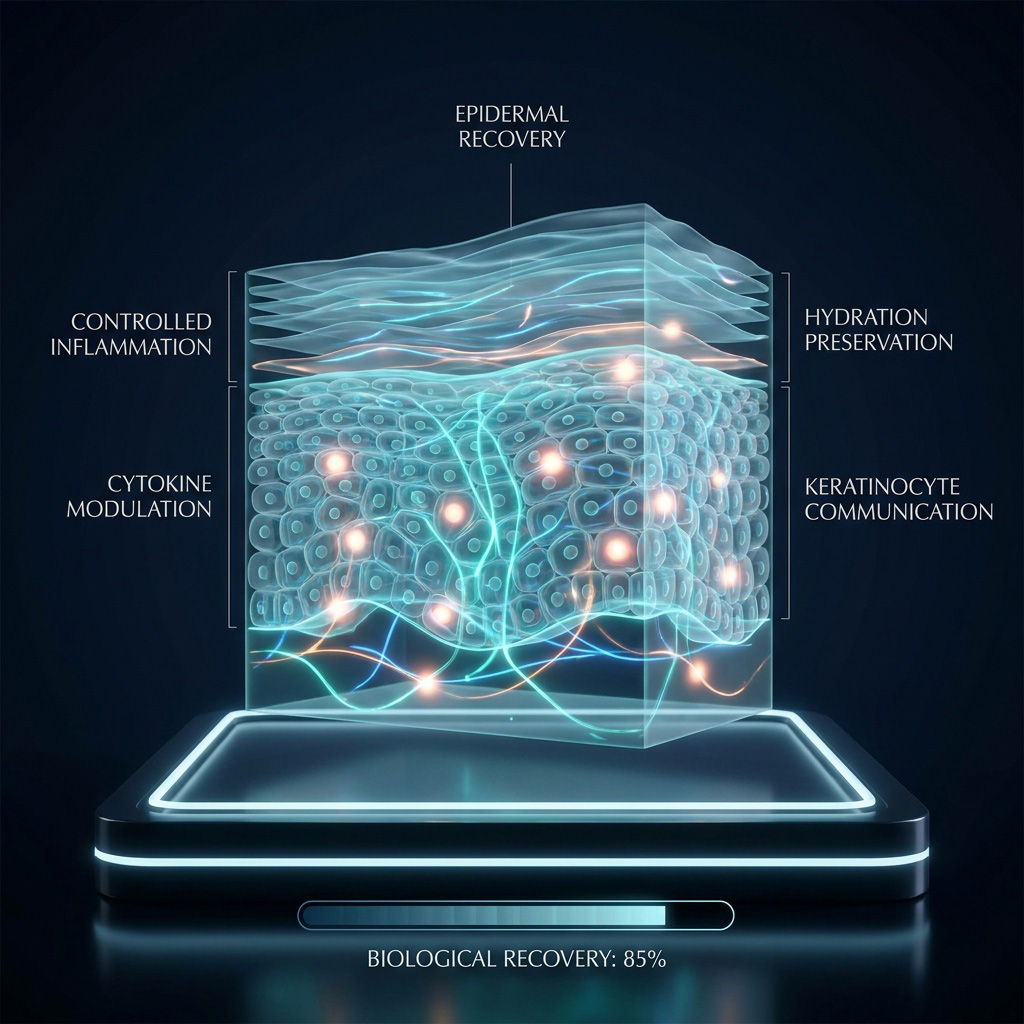
Barrier Recovery
After a peel, the barrier is temporarily altered, leading to increased water loss and reduced retention capacity.
Section 5 · Clinical Relevance

Why This Matters After Chemical Peels

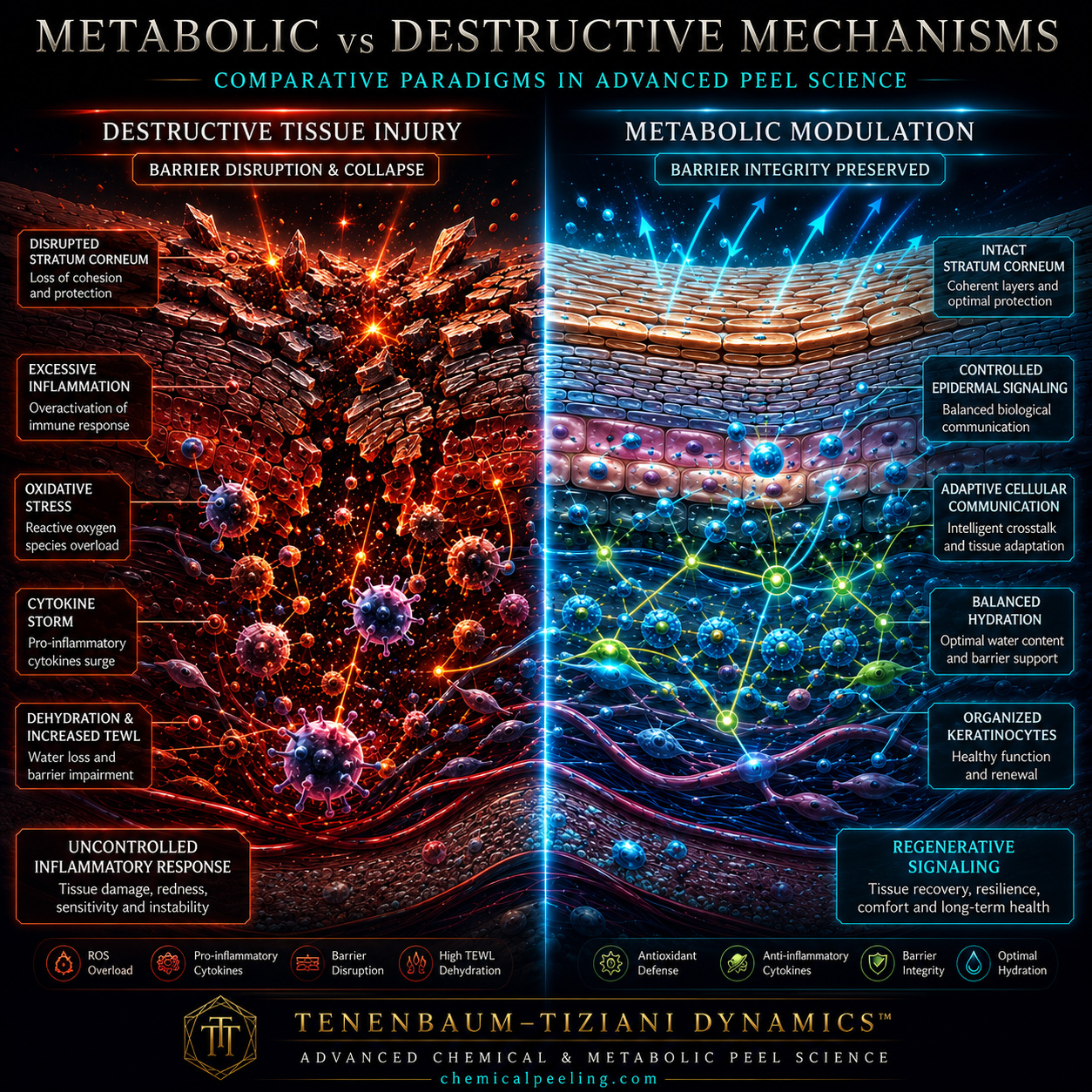
Chemical peeling intentionally modifies the superficial skin structure. This transient alteration can increase trans-epidermal water loss while temporarily reducing the skin’s ability to retain water.

The sensation of dryness observed after a peel is not caused by a single factor, but by the combination of increased water escape and reduced internal hydration capacity.

Key insight

Post-peel dryness is a dual phenomenon: more water is lost and less water is efficiently retained.

Barrier disruption Leads to increased TEWL immediately after the procedure
Corneocyte imbalance Reduces the capacity to maintain water internally
Recovery phase Requires both barrier repair and hydration support
Section 6 · Barrier Architecture

Barrier Lipids, Ceramides and Occlusive Control

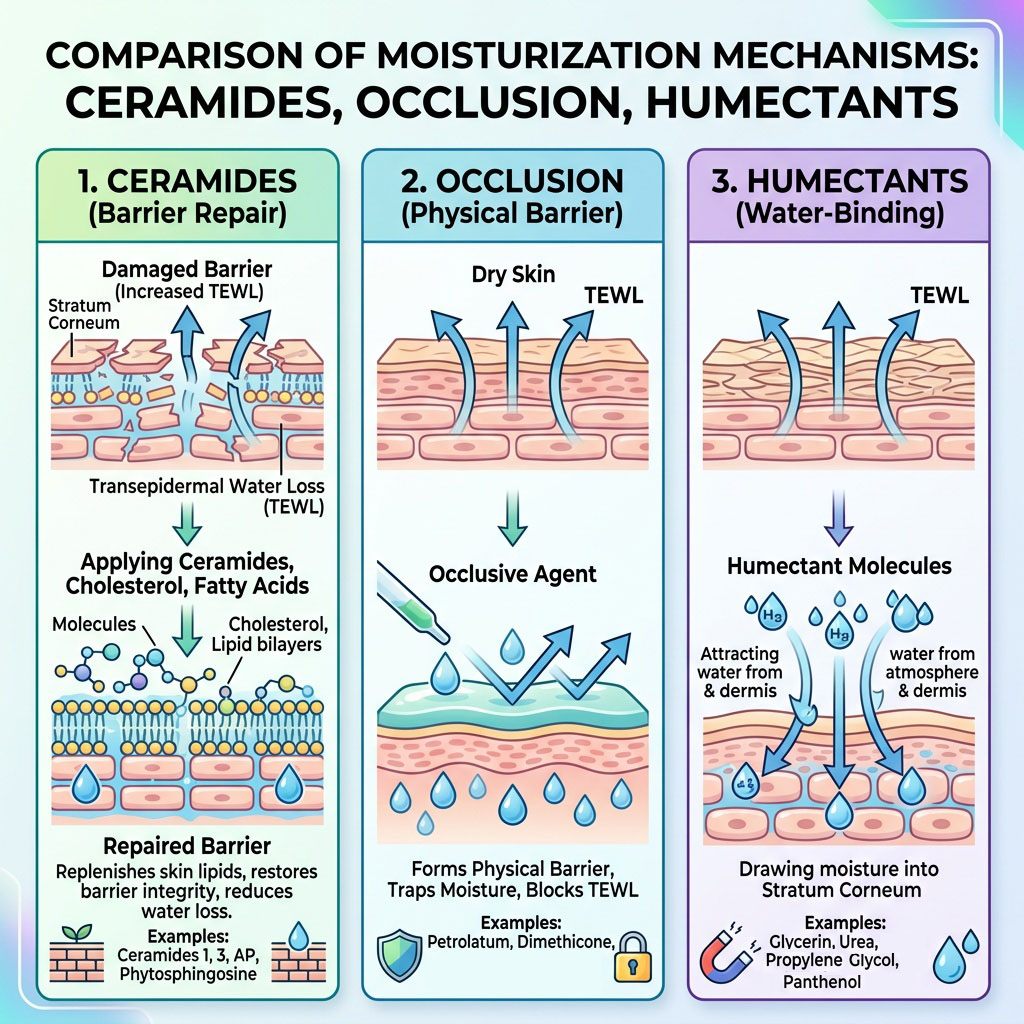
The stratum corneum is not protected by water alone. Its functional strength depends on a structured lipid architecture able to slow unnecessary evaporation and support controlled barrier recovery.

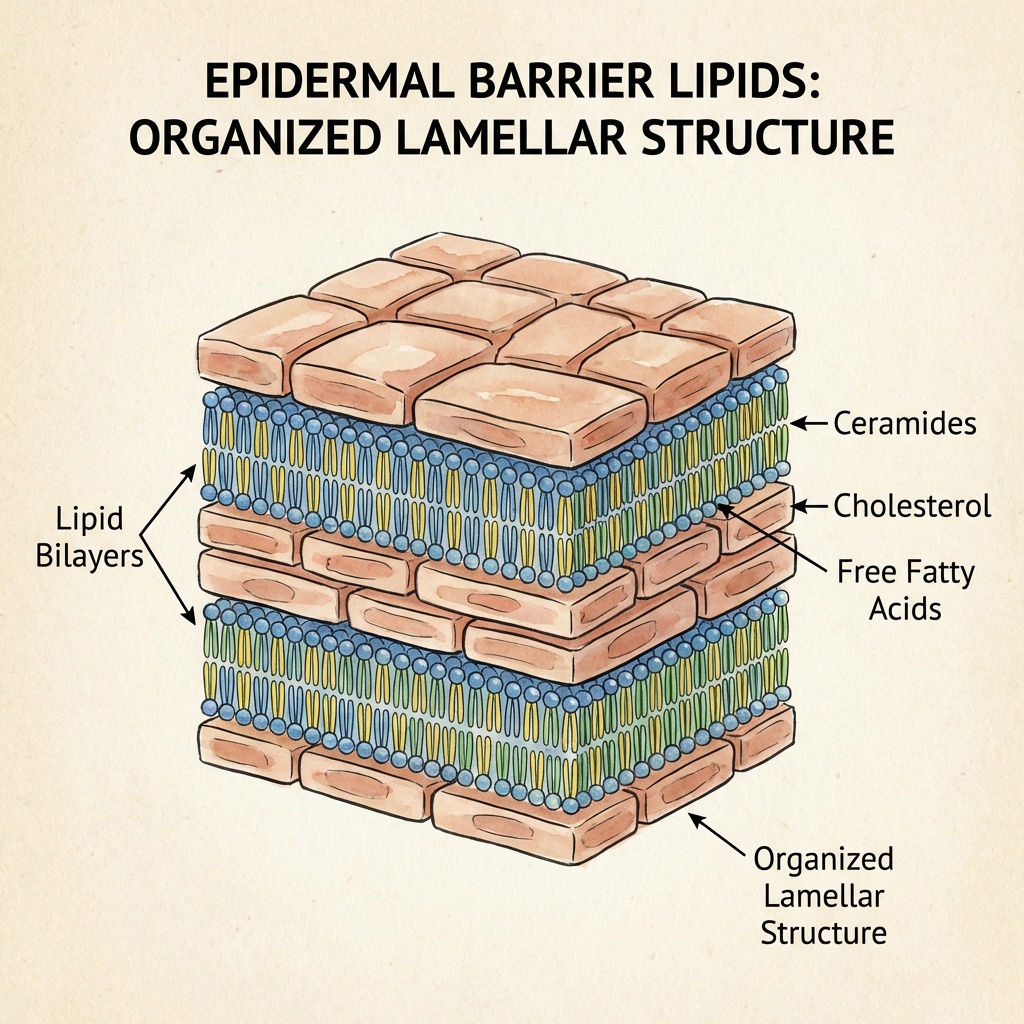
Ceramides, cholesterol and essential fatty acids contribute to the intercellular lipid matrix that surrounds corneocytes. When this matrix is disrupted, water escapes more easily and TEWL tends to increase.

Core principle

Lipid support does not simply “moisturize” the skin. It helps restore the physical conditions required to reduce excessive water escape.

Ceramides Support lamellar lipid organization and barrier coherence.
Cholesterol Contributes to lipid matrix flexibility and structural balance.
Essential fatty acids Participate in barrier lipid composition and surface comfort.
Occlusive control Limits excessive evaporation without replacing biological repair.
Ceramides
Cholesterol
Fatty Acids
A coherent lipid matrix helps control TEWL by reinforcing the barrier environment around corneocytes.
Water-binding environment
Water retention depends on internal binding mechanisms within corneocytes and the presence of natural moisturizing factors.
Section 7 · Hydric Strategy

Water-Holding Strategy Within the Skin

Maintaining hydration is not only a question of external supply. It depends on the ability of the skin to bind water internally within its superficial structure.

Corneocytes and natural moisturizing factors create a microenvironment capable of retaining water. When this internal system is weakened, the skin may appear dehydrated even if the barrier is partially intact.

Core principle

Water-binding mechanisms improve hydration comfort, but they cannot fully compensate for excessive water loss if the barrier remains compromised.

Internal binding Water is held within corneocyte structures
NMF activity Supports water retention and surface flexibility
Hydric balance Requires equilibrium between retention and barrier control
Section 8 · Clinical Interpretation

Clinical Interpretation of TEWL and Retention

In practice, skin dryness is not a single condition. It reflects different combinations of water loss and water retention capacity.

Understanding whether the issue is primarily related to barrier disruption, internal dehydration, or both, allows a more rational approach to skin care and post-procedure management.

High TEWL · Low Retention Barrier compromised with insufficient internal hydration. Common after aggressive procedures or environmental stress.
High TEWL · Normal Retention Water escapes despite preserved internal structure. Barrier repair becomes the priority.
Low TEWL · Low Retention Barrier relatively intact but internal hydration insufficient. Skin may feel tight and uncomfortable.
Balanced State Controlled TEWL and adequate retention. Skin remains flexible, stable and comfortable.
Clinical insight

Effective management requires identifying whether the priority is to reduce water loss, improve retention, or address both simultaneously.

Retention
TEWL
Different clinical situations emerge from the balance between TEWL and water retention capacity.
Section 10 · FAQ

Key Questions About TEWL & Hydration

Understanding the difference between water loss and water retention helps clarify many common misconceptions in dermatology and cosmetic practice.

TEWL and hydration are often confused, yet they describe distinct physiological mechanisms.

What does TEWL measure?

TEWL measures the passive diffusion of water through the epidermis. It reflects how much water escapes from the skin rather than how hydrated the skin is.

Is TEWL the same as skin hydration?

No. Hydration refers to water content within the skin, while TEWL reflects water loss through the barrier.

Why does TEWL increase after a peel?

Chemical peeling temporarily alters the stratum corneum, making it more permeable and allowing more water to escape.

Can hydration alone reduce TEWL?

Improving hydration may increase comfort, but TEWL primarily depends on barrier integrity, not only on water presence.

Why can skin feel dry even when hydrated?

If water is not properly retained or escapes too quickly, the skin may feel dry despite temporary hydration.

What is the ideal balance?

Optimal skin condition requires controlled TEWL and sufficient internal water retention within the stratum corneum.
Share this page with your network